I
The bridge
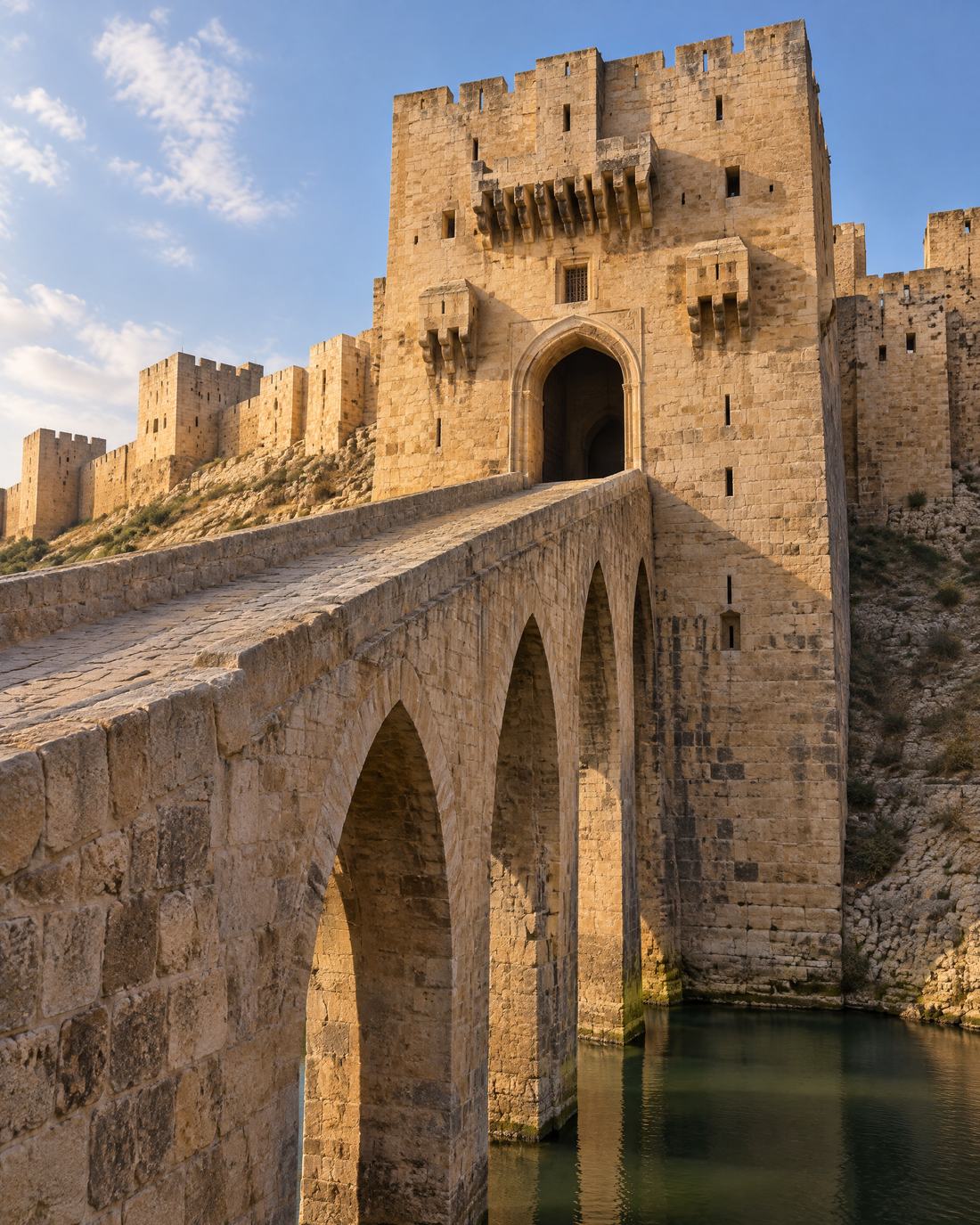
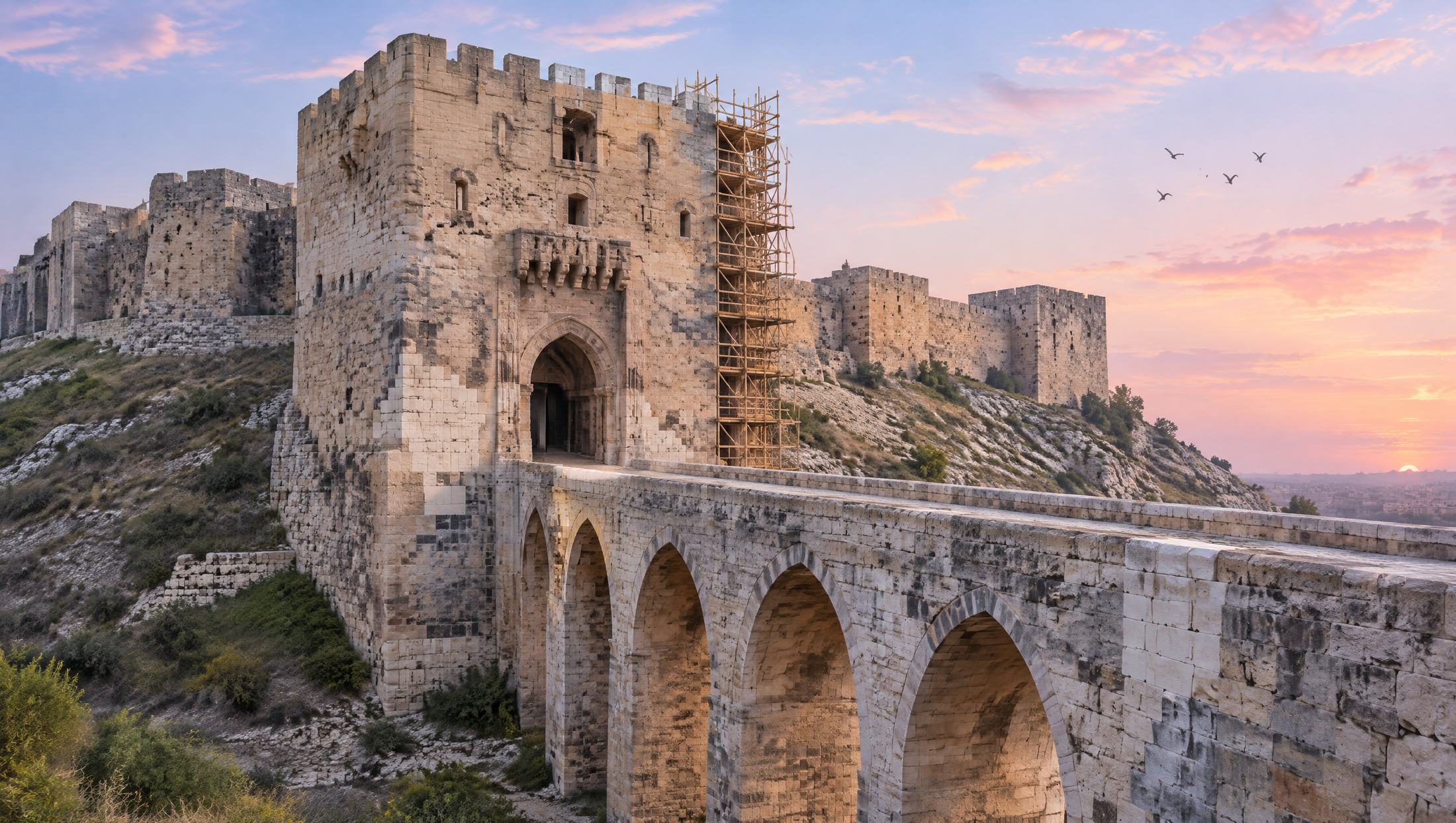
الجسرA tall bridge on pointed arches climbs over the moat to the great gate block, with openings above the door for defenders to drop things on attackers.
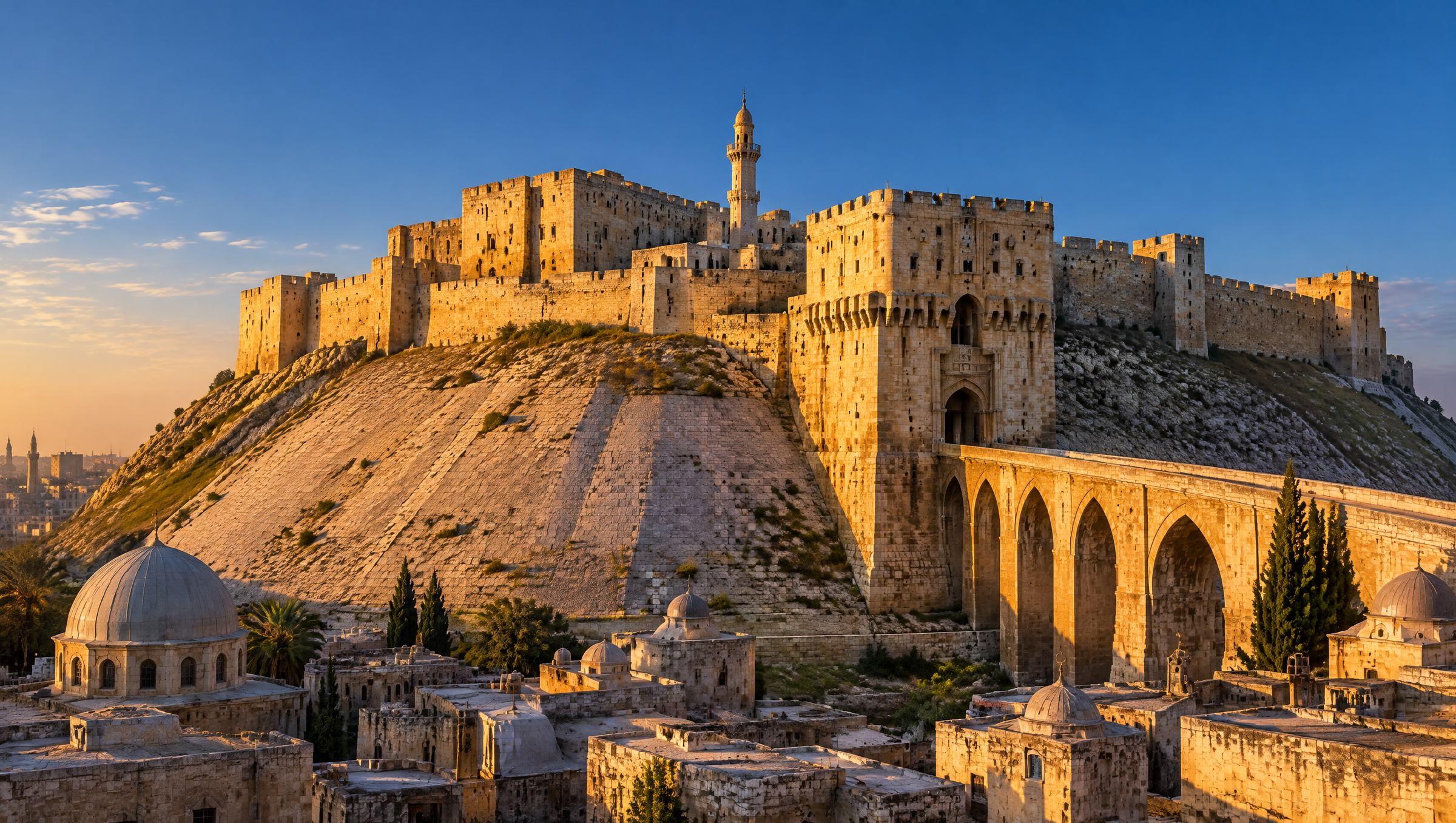
One hill above the old city, built on for more than four thousand years. Every empire left a layer. Scroll down and dig through them.
Start diggingA bridge, then a ramp that keeps turning, so no army could ever charge straight in. Every gate on the way had a guardian.
A tall bridge on pointed arches climbs over the moat to the great gate block, with openings above the door for defenders to drop things on attackers.
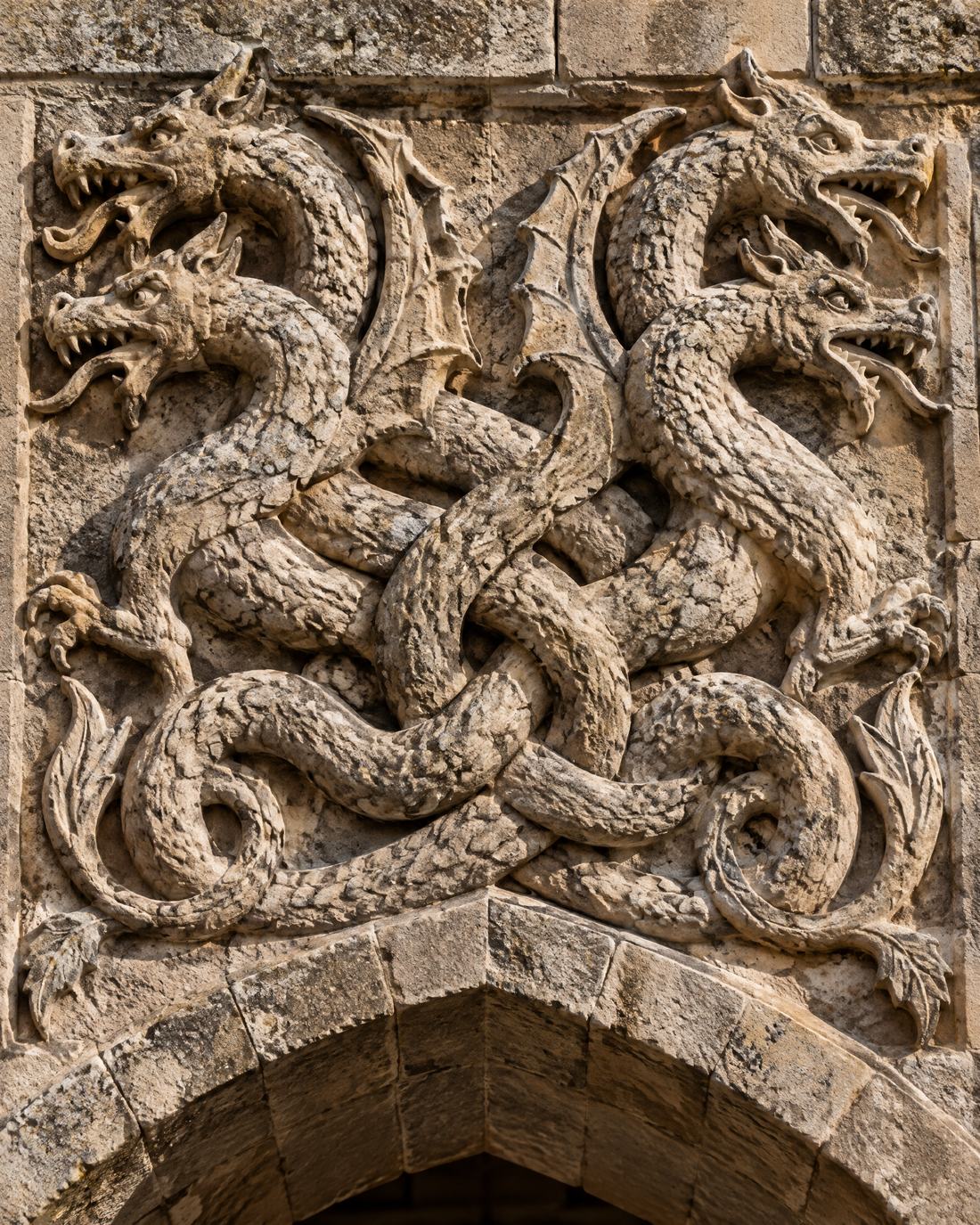
Above the first gate, two intertwined two-headed dragons are carved into the stone, a guard for anyone walking through.
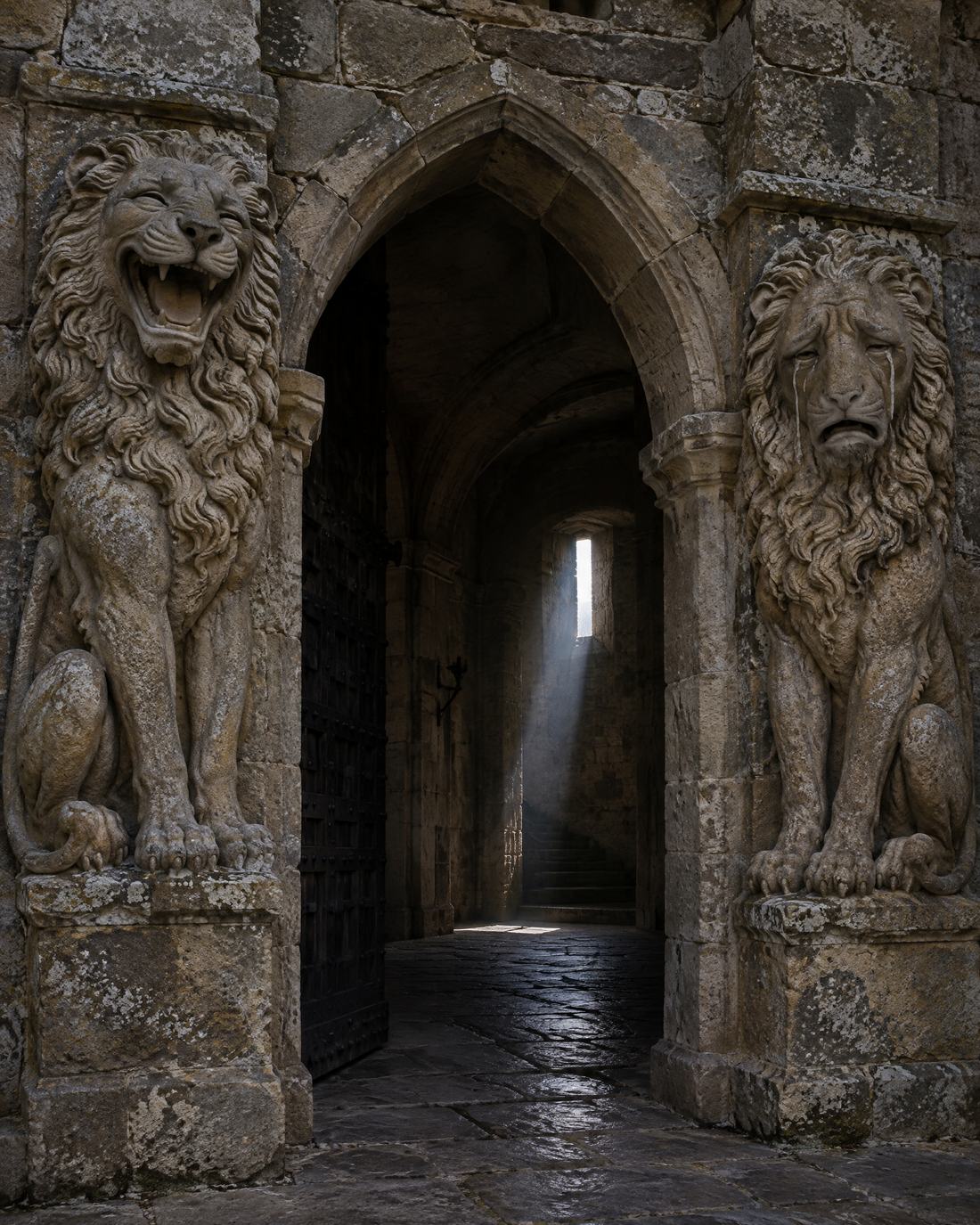
One gate shows a lily between two lions. Further in, a laughing lion faces a weeping one, at a gate inscribed in 1209.
Its horseshoe-decorated iron doors, inscribed 1211, stood for eight centuries, until a missile destroyed them in August 2012.
Around 1200, az-Zahir Ghazi faced the slopes of the mound with stone and deepened the moat. It was built partly against counterweight catapults.
Under the plateau lie the oldest remains on the hill, the ruins of a Bronze Age temple. Archaeologists have dug here since 1996, and the first carved relief came to light in 1997.
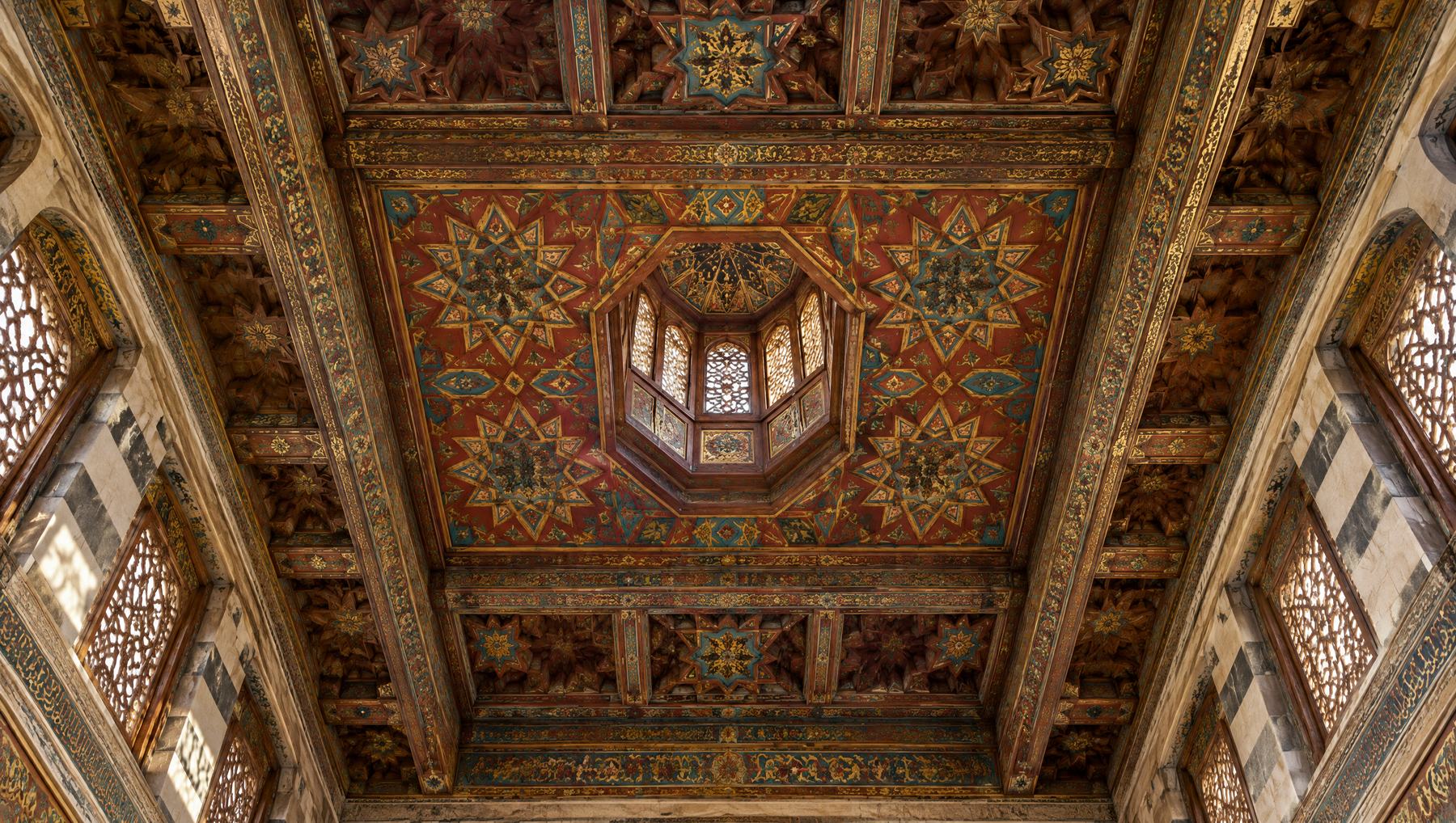
That is how medieval writers described the Throne Hall, built above the gate in 1406–07. The painted ceiling you see today was rebuilt in the twentieth century.
The old story says the Prophet Ibrahim milked his sheep on this hill and gave the milk to the poor. In Arabic, halab means to milk, and the city kept the name.
A folk story. Scholars trace the name to older roots, but Aleppo has told this one for centuries.War and an earthquake reached the hill in the last fifteen years. Restorers are still at work, and the gates are open again.
A missile destroys the iron doors of 1211.
The February earthquake causes significant damage, including parts of the Ottoman mill.
After restoration of the entrance tower, visitors return.
A new phase of restoration begins on the entrance.